Timely rainfall is essential for healthy crop growth. However, wet and humid conditions can also create a favourable environment for pests, insects, fungal infections, and other crop diseases.
Farmers must therefore be prepared to apply pesticides, herbicides, fungicides, or foliar feeds efficiently and at the right time. Choosing the correct spraying equipment can help reduce crop losses, improve coverage, save time, and protect the quality of your produce.
Two common options are motorized sprayers and trolley sprayers. Although both perform similar functions, each is suited to different farming conditions.
What Is a Motorized Sprayer?
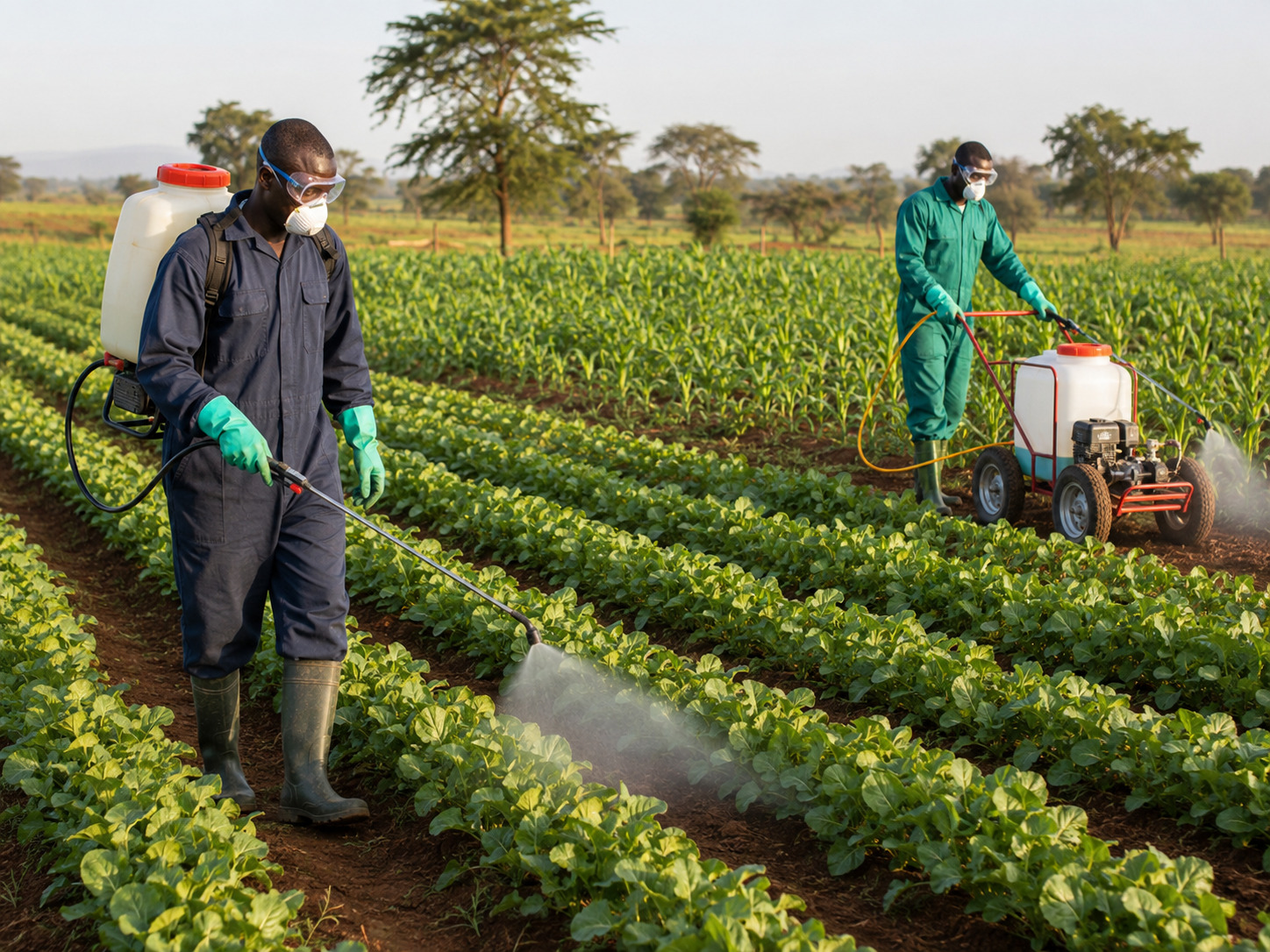
A motorized sprayer is a compact, engine-powered spraying machine that is usually carried on the operator’s back or moved manually around the farm.
It is suitable for small and medium-sized farms, areas with narrow pathways, and fields where the operator needs to move around crops or obstacles easily.
What Is a Trolley Sprayer?
A trolley sprayer is mounted on a wheeled frame and usually comes with a larger tank, longer hose, and powerful engine. The operator moves the unit around the farm while spraying through a connected hose and spray gun.
It is ideal for larger farms, commercial applications, and situations where a high volume of liquid must be applied efficiently.
Factors to Consider When Choosing a Sprayer
1. Size of the Area
Begin by assessing the total area you need to spray.
A motorized sprayer is generally suitable for small and medium-sized farms because it is compact and easy to move between crops.
A trolley sprayer is more appropriate for larger fields, orchards, greenhouses, and commercial farms where extensive coverage is required.
2. Speed and Efficiency
Consider how quickly you need to complete the spraying work.
Trolley sprayers often have larger tanks and powerful pumps, allowing operators to cover a wider area without stopping frequently to refill. They are therefore suitable for time-sensitive or large-scale spraying operations.
Motorized sprayers are effective for smaller areas but may require more frequent refilling depending on the tank capacity.
3. Portability and Manoeuvrability
Motorized sprayers are usually lighter and easier to carry through uneven terrain, narrow crop rows, and areas with many obstacles.
Trolley sprayers are heavier and may be more difficult to move across steep, muddy, rocky, or uneven ground. However, their wheels make them convenient to move on relatively flat and accessible farmland.
4. Spray Pressure and Coverage
Think about the type of crops you are spraying and the level of coverage required.
Motorized sprayers often provide adjustable pressure and nozzle settings, making them suitable for targeted spraying and close-range applications.
Trolley sprayers usually deliver strong, consistent pressure through a long hose. This makes them effective for spraying tall crops, fruit trees, large fields, and areas that require broader coverage.
5. Tank Capacity
A larger tank reduces the number of times you need to stop and refill the machine.
Trolley sprayers generally have a higher tank capacity, making them suitable for extensive spraying jobs. Motorized sprayers have smaller tanks, but their compact size makes them easier to transport and operate.
Choose a tank size that matches your farm size and the operator’s physical ability.
6. Labour Requirements
A motorized sprayer may require the operator to carry the machine for extended periods. This can become tiring, especially when the tank is full.
A trolley sprayer reduces the need to carry the entire machine, although an operator may still need to manage a long hose while spraying.
Consider the number of workers available and the level of physical effort required before making your choice.
7. Cost and Maintenance
Compare the initial purchase price, fuel consumption, maintenance requirements, and availability of spare parts.
Motorized sprayers are often more affordable and may be economical for small farms. Trolley sprayers may cost more initially, but their larger capacity and faster operation can provide better value for large-scale applications.
Whichever option you choose, ensure that spare parts and technical support are readily available.
Which Sprayer Is Right for You?
Choose a motorized sprayer when:
- You operate a small or medium-sized farm
- Your field has narrow paths or uneven terrain
- You need a portable and flexible spraying solution
- You mainly perform targeted spraying
- You have a limited budget
Choose a trolley sprayer when:
- You operate a large farm, orchard, or greenhouse
- You need to spray large areas quickly
- You require a larger tank capacity
- You need strong and consistent spray pressure
- The farm is relatively flat and accessible
Safety Tips When Using a Sprayer
Always wear appropriate protective equipment, including gloves, overalls, boots, goggles, and a suitable face mask.
Follow the chemical manufacturer’s mixing and application instructions carefully. Avoid spraying against strong winds, near people or animals, or close to unprotected water sources.
After use, clean the tank, hose, nozzle, and other components thoroughly. Store the machine and chemicals safely away from children, food, livestock, and direct sunlight.
Final Thoughts
The right choice between a motorized sprayer and a trolley sprayer depends on your farm size, terrain, crops, workload, budget, and spraying requirements.
A motorized sprayer offers portability and flexibility, while a trolley sprayer provides greater capacity, pressure, and efficiency for larger applications.
Before purchasing, assess your farming needs carefully and select a reliable machine supported by accessible spare parts, maintenance services, and professional technical assistance.
Need help choosing the right machine?
Tell us about your acreage, location, crop, livestock, or intended application. Our team will help you identify a suitable machine.
Talk to Our Team