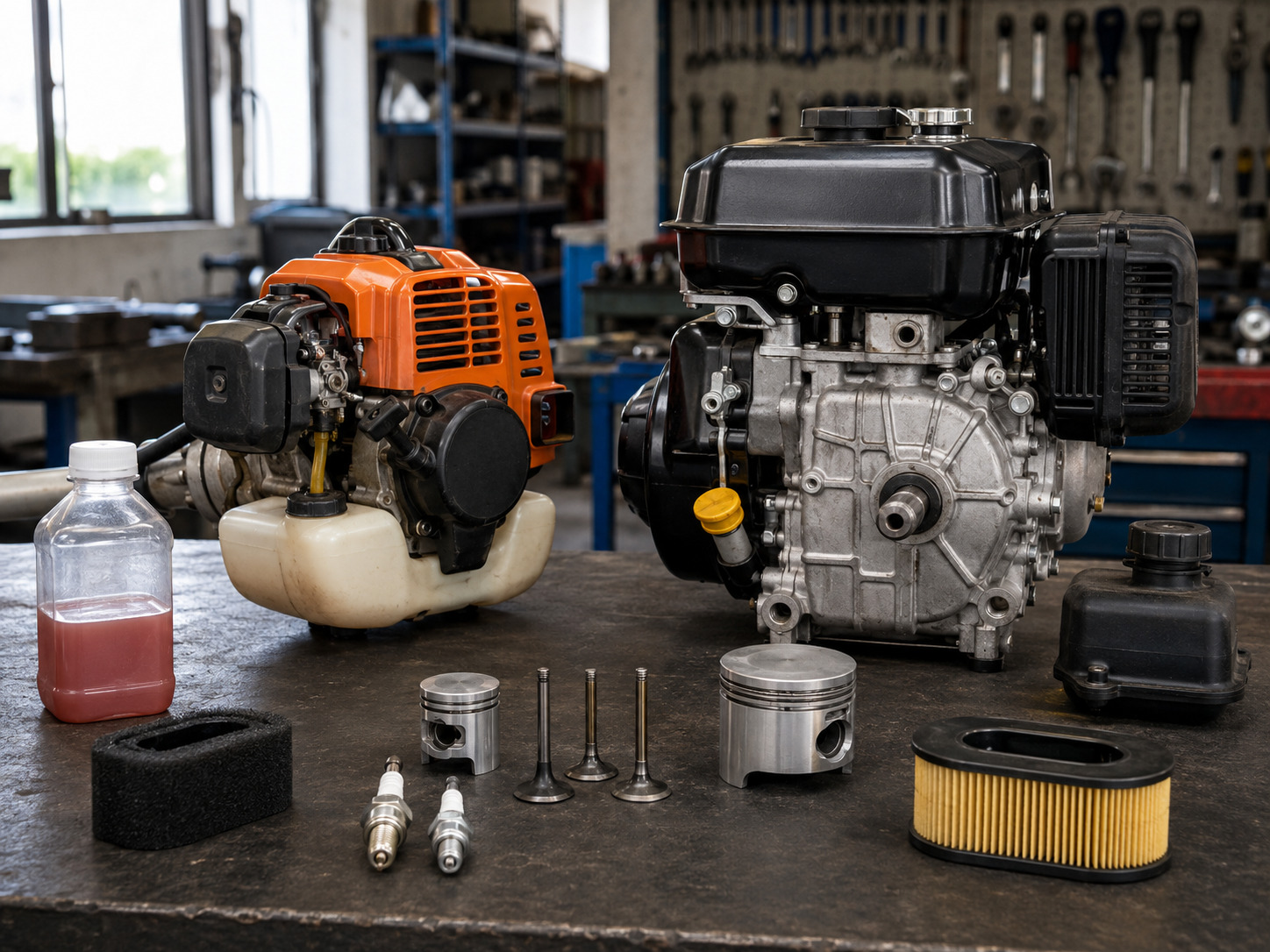
Two-stroke and four-stroke engines are commonly used in agricultural machinery, garden equipment, generators, motorcycles, and other motorized tools. Although both convert fuel into mechanical power, they differ in how they complete the combustion cycle, their maintenance requirements, fuel efficiency, weight, and performance.
Understanding these differences can help you choose the right engine for your farming or outdoor equipment.
What Is an Engine Stroke?
A stroke is the movement of a piston from one end of the cylinder to the other.
The piston moves between two main positions:
- Top Dead Centre: The piston is at the highest point in the cylinder.
- Bottom Dead Centre: The piston is at the lowest point in the cylinder.
The movement of the piston helps draw in the fuel-air mixture, compress it, produce power, and remove exhaust gases.
What Is a Two-Stroke Engine?
A two-stroke engine completes one power cycle in two piston strokes, which occur during one revolution of the crankshaft.
The engine combines several stages of the combustion process. As the piston moves, the engine draws in the fuel-air mixture, compresses it, produces power, and releases exhaust gases within a short cycle.
Because it produces a power stroke during every crankshaft revolution, a two-stroke engine can generate strong power relative to its size and weight.
Two-stroke engines are commonly found in:
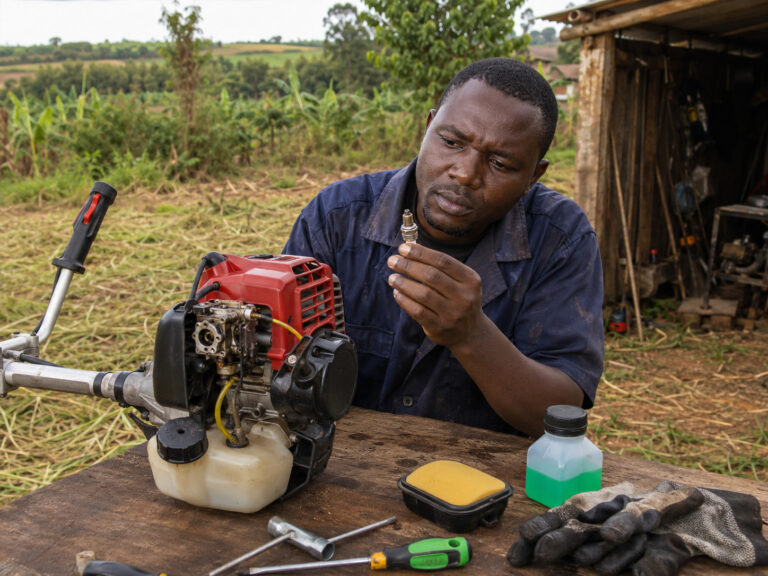
- Brush cutters
- Chainsaws
- Leaf blowers
- Small sprayers
- Small motorcycles
- Portable outdoor equipment
Many two-stroke engines require petrol to be mixed with a specific amount of two-stroke oil. The correct mixing ratio must always be followed to ensure proper lubrication.
What Is a Four-Stroke Engine?
A four-stroke engine completes one power cycle in four piston strokes, which occur during two revolutions of the crankshaft.
The four stages are:
1. Intake Stroke
The intake valve opens, and the piston moves downwards, drawing a mixture of air and fuel into the cylinder.
2. Compression Stroke
Both valves close, and the piston moves upwards, compressing the fuel-air mixture.
3. Power Stroke
The spark plug ignites the compressed mixture. The resulting combustion forces the piston downwards, producing power.
4. Exhaust Stroke
The exhaust valve opens, and the piston moves upwards, pushing the burnt gases out of the cylinder.
Four-stroke engines are commonly used in:
- Power tillers
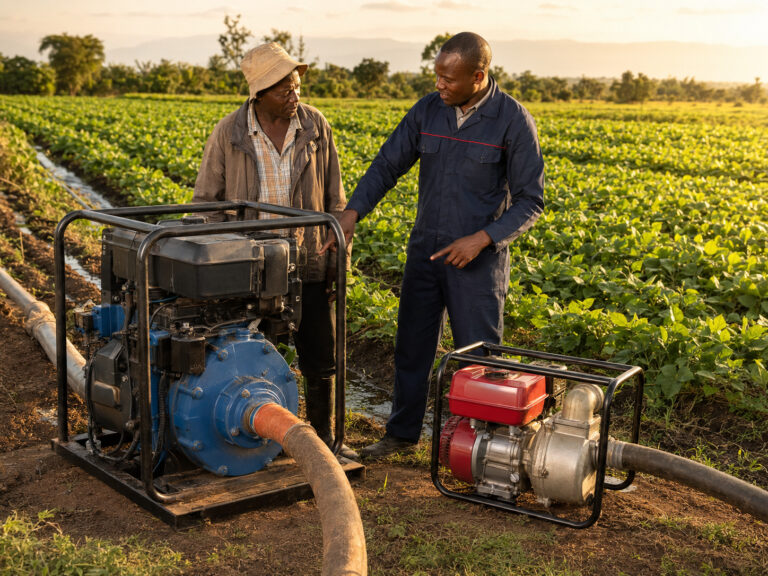
- Water pumps
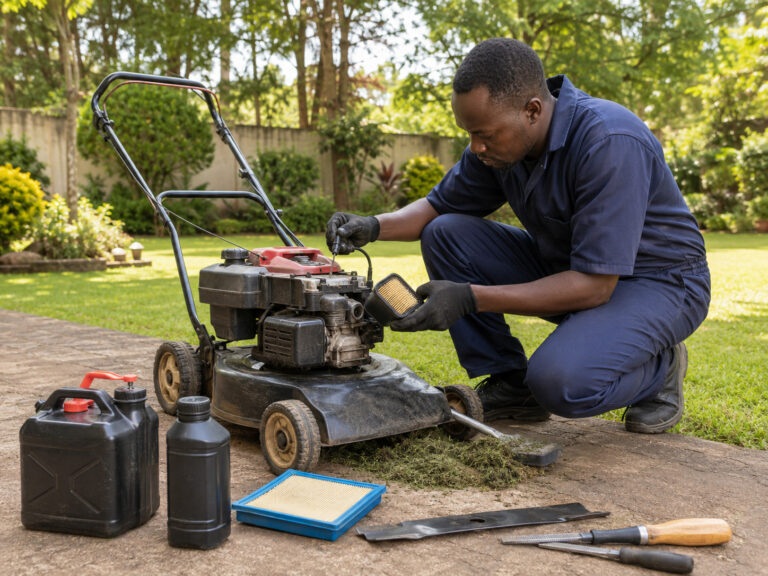
- Lawn mowers
- Generators
- Motor vehicles
- Tractors
- Larger agricultural machinery
Unlike most two-stroke engines, four-stroke engines normally keep the fuel and lubricating oil in separate systems.
Key Differences Between Two-Stroke and Four-Stroke Engines
Power Cycle
A two-stroke engine produces a power stroke during every revolution of the crankshaft.
A four-stroke engine produces a power stroke once every two crankshaft revolutions.
This allows a two-stroke engine to produce relatively high power from a smaller and lighter engine.
Weight
Two-stroke engines are generally lighter because they have fewer moving parts and a simpler internal design.
Four-stroke engines are usually heavier because they contain valves, a camshaft, and a separate lubrication system.
Power-to-Weight Ratio
Two-stroke engines normally have a higher power-to-weight ratio. This makes them suitable for portable equipment that must be carried or moved frequently.
Four-stroke engines may be heavier, but they provide stable and efficient operation for equipment used over longer periods.
Fuel Efficiency
Four-stroke engines are generally more fuel-efficient because the intake, compression, power, and exhaust stages occur separately.
In a two-stroke engine, some unburnt fuel may escape with the exhaust gases, resulting in higher fuel consumption.
Lubrication
Most two-stroke engines are lubricated by oil mixed directly with the petrol. Some of this oil burns during combustion.
Four-stroke engines normally have a separate oil reservoir that continuously lubricates the moving engine components.
This means four-stroke engine oil must be checked and changed according to the manufacturer’s recommended schedule.
Emissions
Two-stroke engines generally produce more smoke and exhaust emissions because they burn a mixture of fuel and lubricating oil.
Four-stroke engines usually burn fuel more completely and produce fewer emissions.
The actual level of emissions will depend on the engine design, condition, maintenance, and quality of fuel used.
Noise and Vibration
Two-stroke engines often operate at higher revolutions and may produce more noise and vibration.
Four-stroke engines generally run more smoothly and quietly, making them suitable for applications where prolonged operation is required.
Torque
Two-stroke engines can provide rapid power delivery and strong performance for their size.
Four-stroke engines often provide smoother and more controlled torque across a wider operating range. This makes them effective for equipment that performs continuous or demanding work.
Maintenance
Two-stroke engines have fewer internal components, making their basic design relatively simple. However, improper fuel mixing can quickly damage the piston, cylinder, and other internal parts.
Four-stroke engines have more components and require regular oil changes, valve checks, and other scheduled maintenance. However, proper lubrication can reduce internal wear and contribute to a longer service life.
Durability
Four-stroke engines generally experience less internal wear because they have a dedicated lubrication system and operate at lower engine speeds in many applications.
Two-stroke engines may wear more quickly when exposed to poor fuel, incorrect oil ratios, overheating, or continuous high-speed operation.
Cost
Two-stroke engines are often cheaper to manufacture and purchase because they have a simpler design.
Four-stroke engines may have a higher initial cost because they contain more components and use a more complex operating system. Their improved fuel economy and durability may, however, provide better long-term value.
Two-Stroke and Four-Stroke Comparison
| Feature | Two-Stroke Engine | Four-Stroke Engine |
|---|---|---|
| Power cycle | Completed in two piston strokes | Completed in four piston strokes |
| Crankshaft revolutions | One revolution per power cycle | Two revolutions per power cycle |
| Weight | Generally lighter | Generally heavier |
| Power-to-weight ratio | Higher | Lower |
| Fuel efficiency | Generally lower | Generally higher |
| Lubrication | Oil commonly mixed with petrol | Separate engine-oil system |
| Emissions | Usually higher | Usually lower |
| Noise | Generally louder | Generally quieter |
| Design | Simpler, with fewer moving parts | More complex, with valves and a camshaft |
| Maintenance | Simple design but sensitive to fuel mixing | Requires regular oil and valve maintenance |
| Typical use | Portable and lightweight equipment | Continuous-duty and larger equipment |
Advantages of a Two-Stroke Engine
A two-stroke engine may be suitable when you need:
- Lightweight and portable equipment
- High power relative to engine size
- A simple mechanical design
- Fast acceleration
- Equipment that can operate in different positions
- A lower initial purchase cost
These qualities make two-stroke engines popular in handheld machines such as brush cutters, chainsaws, and leaf blowers.
Disadvantages of a Two-Stroke Engine
Possible disadvantages include:
- Higher fuel consumption
- More smoke and emissions
- Increased noise
- Greater dependence on the correct fuel-oil mixture
- Faster wear when poorly maintained
- Increased carbon buildup
- A potentially shorter service life
Using the wrong oil or mixing ratio can cause severe engine damage.
Advantages of a Four-Stroke Engine
A four-stroke engine may be suitable when you need:
- Better fuel efficiency
- Lower exhaust emissions
- Quieter operation
- Smoother power delivery
- Improved durability
- A dedicated lubrication system
- Equipment for extended or frequent use
Four-stroke engines are commonly preferred for water pumps, generators, tillers, lawn mowers, and larger machines.
Disadvantages of a Four-Stroke Engine
Possible disadvantages include:
- Higher initial purchase cost
- Increased weight
- More moving components
- More complex repairs
- A need for regular engine-oil changes
- Additional maintenance requirements
A four-stroke engine should also be transported and stored in the correct position to prevent engine oil from entering the air filter, carburettor, or combustion chamber.
Which Engine Should You Choose?
Choose a two-stroke engine when portability, low weight, and a high power-to-weight ratio are important.
It may be suitable for equipment that is carried by the operator or used for shorter, high-speed tasks.
Choose a four-stroke engine when fuel economy, lower emissions, reduced noise, and prolonged operation are the main priorities.
It may be the better choice for machinery used regularly, continuously, or under heavier workloads.
Before purchasing, consider:
- The type of work
- Frequency of use
- Required engine power
- Fuel availability
- Operating costs
- Equipment weight
- Maintenance requirements
- Availability of spare parts
- Access to technical support
Important Maintenance Tips
Regardless of the engine type:
- Use fresh, clean fuel from a trusted supplier.
- Follow the recommended fuel grade.
- Use the correct oil type.
- Follow the specified fuel-oil ratio for two-stroke engines.
- Check engine-oil levels regularly in four-stroke engines.
- Clean or replace the air filter as required.
- Inspect the spark plug periodically.
- Keep cooling openings free from dirt and debris.
- Follow the manufacturer’s service schedule.
- Store the machine correctly when it is not in use.
Final Thoughts
Two-stroke and four-stroke engines each have advantages depending on the intended application.
Two-stroke engines are generally lighter, simpler, and powerful for their size, making them suitable for portable equipment. Four-stroke engines are usually quieter, more fuel-efficient, and more durable, making them ideal for prolonged and demanding applications.
The best engine is not simply the one with the most power. It is the one that matches your workload, budget, operating environment, and maintenance capabilities.
Need help choosing the right machine?
Tell us about your acreage, location, crop, livestock, or intended application. Our team will help you identify a suitable machine.
Talk to Our Team