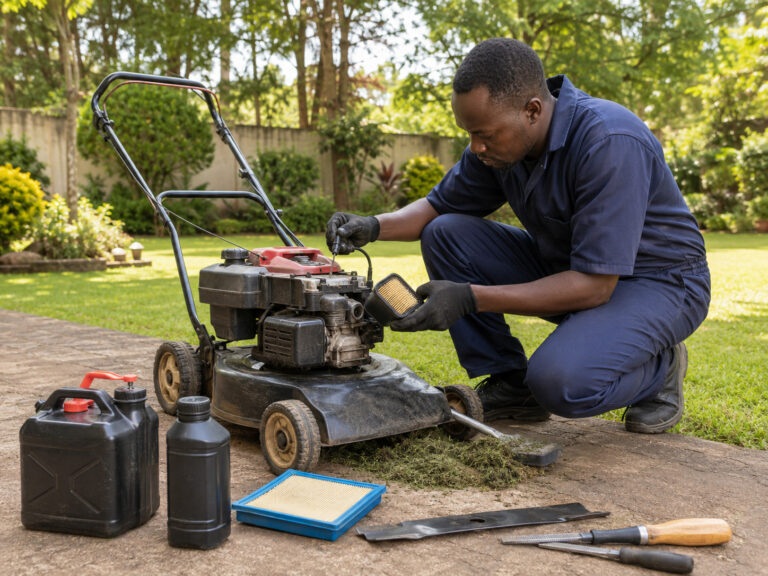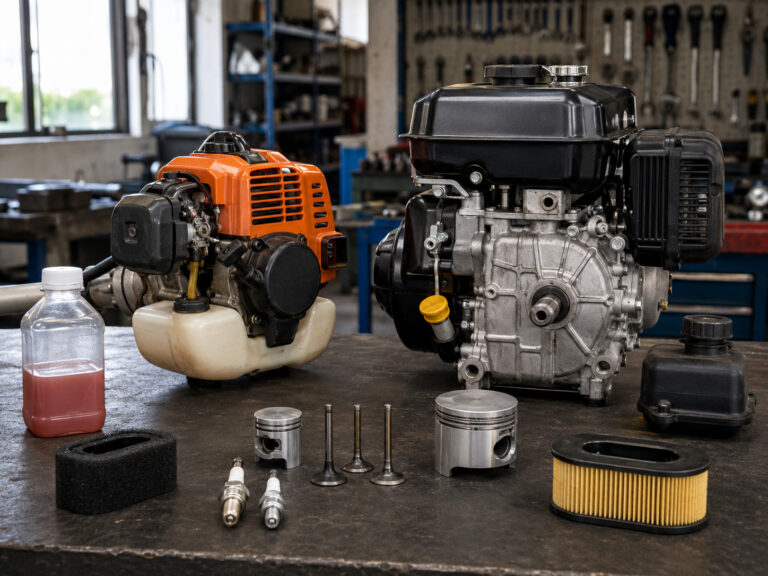

A brush cutter is an essential tool for clearing grass, weeds, and overgrown vegetation. However, like any engine-powered machine, it may occasionally become difficult to start, lose power, or operate unevenly.
Before taking the machine for repair, there are several basic components you can inspect. In many cases, the problem may be caused by the spark plug, air filter, fuel, or carburettor.
Always switch off the machine, allow the engine to cool, and follow the manufacturer’s safety instructions before carrying out any inspection or maintenance.
1. Check the Spark Plug
The spark plug produces the spark required to ignite the fuel-air mixture inside the engine.
Remove the spark plug and inspect its condition. A wet spark plug may indicate that fuel is reaching the combustion chamber, but the engine is not igniting it properly.
Look for:
- Carbon deposits
- Oil or fuel contamination
- Cracks or damage
- A worn electrode
- An incorrect electrode gap
- A loose connection
Light deposits can be removed using a suitable spark plug cleaner or a soft wire brush. Avoid using petrol as a general cleaning solution unless specifically recommended by the manufacturer.
If the spark plug is heavily worn, damaged, or has reached its recommended service life, replace it with the correct type.
Keeping a spare spark plug can help reduce downtime when working in the field.
2. Check the Air Filter
The air filter prevents dust, grass, and debris from entering the engine.
When the filter becomes blocked, the engine may not receive enough air. This can cause difficult starting, loss of power, excessive fuel consumption, coughing, sputtering, or heavy smoke.
Remove the filter and inspect it carefully.
Depending on the type of filter, you may need to:
- Tap it gently to remove loose dust
- Wash it in warm, soapy water
- Allow it to dry completely
- Apply the recommended filter oil
- Replace it if worn or damaged
Always follow the cleaning instructions in the user manual. Some filters are reusable, while others must be replaced.
Regular filter maintenance is especially important when working in dry, dusty conditions.
3. Check the Fuel
Old, contaminated, or incorrectly mixed fuel is a common cause of brush cutter problems.
Confirm that the tank contains enough fresh fuel and that the correct fuel type is being used.
For two-stroke brush cutters, ensure that petrol and two-stroke oil are mixed in the ratio recommended by the manufacturer. Too much oil can cause smoke and carbon deposits, while too little oil can result in poor lubrication and severe engine damage.
Inspect the fuel for:
- Dirt or debris
- Water contamination
- Discolouration
- An unusual smell
- Incorrect oil mixture
- Long storage periods
If the fuel is old or contaminated, drain the tank safely and refill it with fresh, correctly mixed fuel.
Do not confuse the engine’s fuel mixture with separate engine oil. Many two-stroke brush cutters do not have a separate engine-oil reservoir.
If the machine will not be used for an extended period, follow the manufacturer’s storage instructions. This may include draining the fuel tank and running the engine until the carburettor is empty.
4. Inspect the Fuel Filter and Fuel Lines
A blocked fuel filter or damaged fuel line can prevent fuel from reaching the engine.
Inspect the fuel lines for:
- Cracks
- Hardening
- Leaks
- Loose connections
- Blockages
The fuel filter is usually located inside the fuel tank. If it is clogged or damaged, replace it with the correct part.
Fuel-system components should be handled carefully because leaking petrol creates a serious fire hazard.
5. Check the Carburettor
The carburettor mixes fuel and air before they enter the engine.
If the brush cutter has been stored for a long time with fuel inside it, the fuel may deteriorate and leave sticky deposits in the carburettor. These deposits can block small passages and prevent the engine from starting or running properly.
Possible signs of carburettor trouble include:
- The engine starts and then stops
- The machine only runs with the choke on
- The engine idles unevenly
- The brush cutter loses power
- Fuel leaks from the carburettor
- The engine does not respond properly to the throttle
Carburettor cleaning and adjustment require care. Incorrect adjustment can damage the engine or create unsafe operating conditions.
If basic cleaning does not solve the problem, seek help from a qualified technician.
6. Check the Choke and Starting Procedure
An incorrect starting procedure can make a fully functional brush cutter appear faulty.
When starting a cold engine, the choke is usually engaged to provide a richer fuel mixture. Once the engine starts, the choke should be gradually returned to the normal running position.
Using the choke incorrectly may flood the engine or prevent it from starting.
Consult the user manual for the correct sequence, which may include:
- Placing the machine on stable ground
- Switching the ignition to the “on” position
- Pressing the primer bulb
- Engaging the choke
- Pulling the starter cord
- Reducing the choke after the engine fires
- Allowing the engine to warm up briefly
Avoid pulling the starter rope excessively, as this may flood the engine or damage the starter mechanism.
7. Check for a Flooded Engine
A flooded engine contains too much fuel and may not start.
Common signs include a strong smell of petrol and a wet spark plug.
To clear a flooded engine:
- Switch off the machine
- Remove the spark plug
- Allow the combustion chamber to dry
- Clean and dry the spark plug
- Reinstall it correctly
- Attempt to start the engine without using the choke
Always follow the manufacturer’s recommended procedure.
8. Check the Exhaust and Spark Arrestor
Carbon deposits can block the exhaust outlet or spark arrestor screen.
A blocked exhaust restricts the flow of gases and may cause loss of power, overheating, difficult starting, or uneven operation.
Inspect the muffler and spark arrestor according to the maintenance schedule. Clean or replace blocked components using the correct procedure.
Do not operate the brush cutter without the muffler or spark arrestor installed.
9. Avoid Running Only at Low Speed
Operating a two-stroke brush cutter continuously at very low engine speed can contribute to carbon buildup.
The engine should be operated within the recommended speed range for the task. However, avoid holding it at maximum throttle unnecessarily when it is not cutting.
Use smooth throttle control and allow the engine to work at the speed recommended by the manufacturer.
10. Use the Correct Fuel Quality
Use fresh fuel from a trusted supplier and follow the octane rating specified in the user manual.
A higher octane rating is not automatically better unless it is recommended for the engine. The most important factors are using clean fuel, the correct oil mixture, and the manufacturer’s specified fuel grade.
Poor-quality or contaminated fuel can cause knocking, poor combustion, difficult starting, and reduced engine performance.
When Should You Seek Professional Help?
Take the brush cutter to a qualified technician when:
- It still will not start after basic checks
- Fuel is leaking
- The starter rope is damaged or stuck
- The engine produces unusual metallic noises
- The carburettor requires adjustment
- The machine overheats repeatedly
- There is excessive smoke
- The cutting head rotates while the engine is idling
- Internal engine damage is suspected
Attempting complicated repairs without the correct skills and tools may worsen the problem or create a safety risk.
Final Thoughts
When a brush cutter will not start, begin by checking the spark plug, air filter, fuel, fuel lines, and carburettor. These are among the most common causes of starting and performance problems.
Regular maintenance, fresh fuel, correct operating procedures, and proper storage can prevent many faults and extend the life of the machine.
For reliable performance, always use genuine replacement parts and seek professional technical support when the problem cannot be resolved through routine maintenance.
Need help choosing the right machine?
Tell us about your acreage, location, crop, livestock, or intended application. Our team will help you identify a suitable machine.
Talk to Our Team