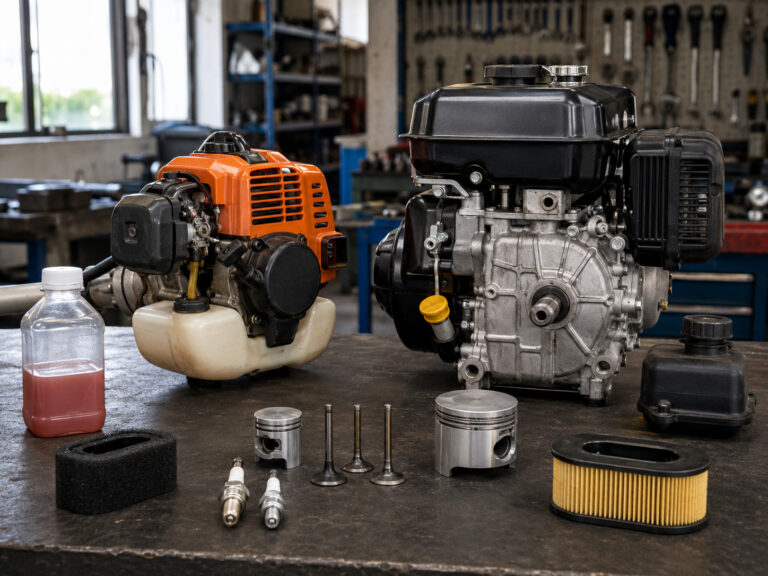
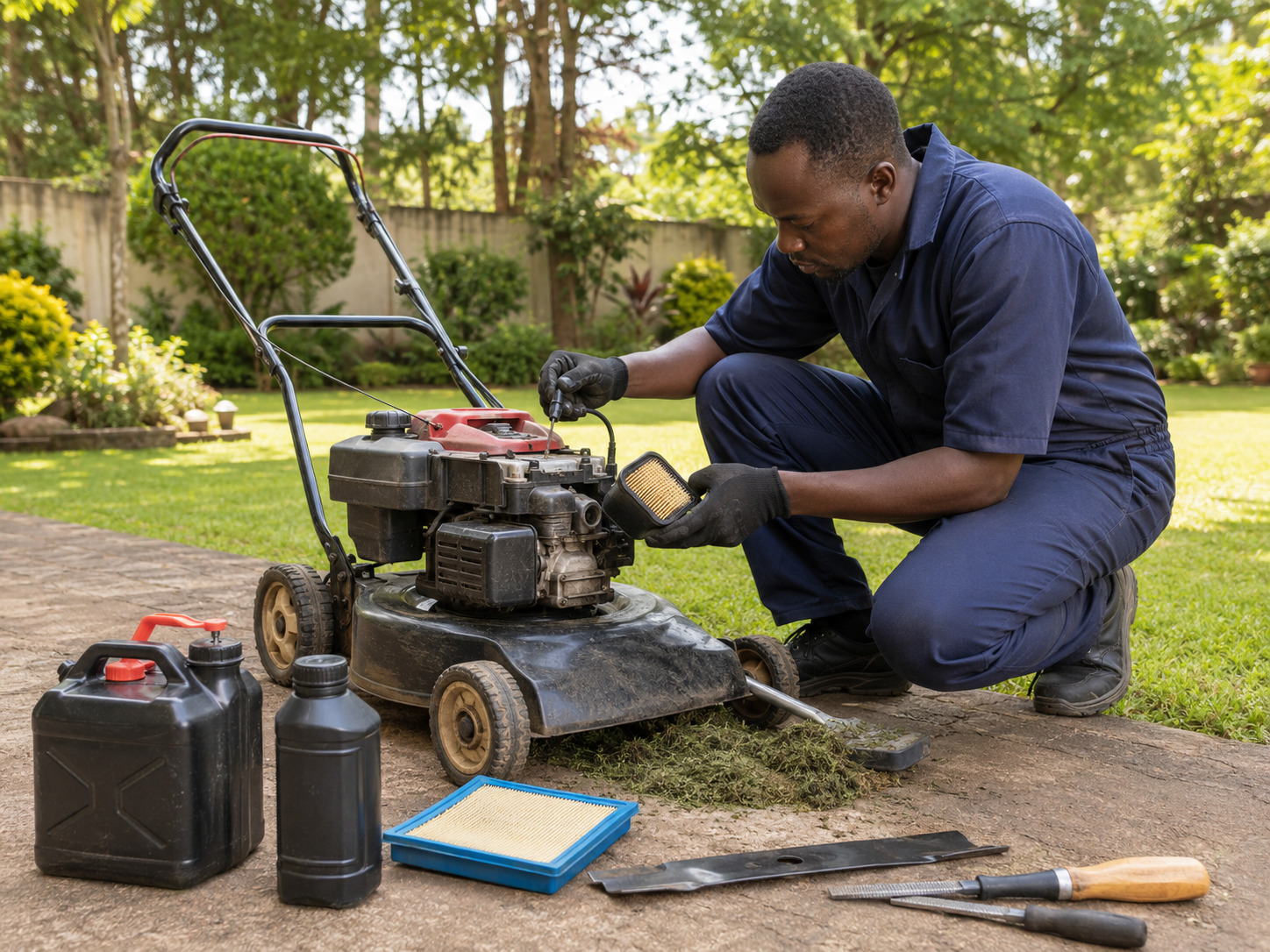
A lawn mower that will not start, suddenly loses power, produces smoke, or has a starter rope that is difficult to pull can be frustrating. Fortunately, many common lawn mower problems can be traced to simple issues such as stale fuel, a dirty air filter, a faulty spark plug, or grass buildup beneath the mower deck.
This guide explains several common problems affecting Briggs & Stratton-powered lawn mowers and the basic checks you can perform before seeking professional assistance.
Before inspecting or cleaning the mower, switch off the engine, allow it to cool, disconnect the spark plug wire, and follow all safety instructions provided in the owner’s manual.
1. The Starter Rope Is Hard to Pull or Feels Stuck
A starter rope that is difficult to pull may indicate that the engine brake is still engaged, the mower blade is obstructed, or the starter mechanism has developed a fault.
Check the Engine Brake Handle
Many walk-behind lawn mowers have a safety bar located on the handle. This bar must be pulled fully against the main handle before the starter rope can move freely and the engine can run.
Ensure that you are holding the safety bar firmly before pulling the starter rope.
Check for Grass Beneath the Mower Deck
Long grass, wet clippings, or compacted debris may collect beneath the mower deck and prevent the blade from rotating.
To inspect the mower safely:
- Switch off the engine.
- Allow the engine and exhaust to cool.
- Disconnect the spark plug wire.
- Move the mower to a dry, level surface.
- Inspect the underside of the deck.
- Remove grass and debris using a suitable tool.
Never place your hands near the blade while the spark plug wire is connected.
Check for Blade Obstructions
Stones, sticks, wire, and other foreign objects may become trapped around the blade.
Remove any obstruction carefully and inspect the blade for bending or damage before using the mower again.
Check the Engine Oil Level
In some cases, excessive oil or oil entering the cylinder may make the starter rope difficult to pull.
Place the mower on level ground and check the oil level using the method recommended in the owner’s manual. Do not operate the mower with too much or too little oil.
Seek professional assistance if the starter rope remains stuck after checking the safety handle and mower deck.
2. The Lawn Mower Will Not Start
A mower that will not start usually has a problem involving fuel, air, ignition, or the starting procedure.
Use Fresh Fuel
Old fuel is one of the most common causes of starting problems.
Petrol can deteriorate during storage and leave deposits inside the fuel system and carburettor. If the mower contains fuel from a previous season or fuel that has been stored for a long time, drain it safely and refill the tank with fresh petrol of the recommended grade.
Do not mix fresh fuel with heavily contaminated or stale fuel.
Inspect the Spark Plug
The spark plug provides the spark needed to ignite the fuel-air mixture.
Check whether the spark plug is:
- Loose
- Dirty
- Wet with fuel
- Covered in carbon deposits
- Damaged
- Disconnected
- Excessively worn
Clean light deposits using an appropriate spark plug brush. Replace the plug if it is damaged or badly worn.
Ensure that the spark plug is correctly tightened and that the wire is securely connected.
Check the Air Filter
A clogged air filter can restrict airflow and make the engine difficult to start.
Remove the filter and inspect it for dirt, dust, oil, and grass particles. Clean or replace it according to the manufacturer’s instructions.
Do not operate the mower without an air filter, as dirt may enter and damage the engine.
Confirm That Fuel Is Reaching the Engine
A blocked fuel filter, fuel line, tank vent, or carburettor may prevent petrol from reaching the engine.
Check for:
- An empty fuel tank
- Closed fuel shut-off valve
- Blocked or damaged fuel lines
- A clogged fuel filter
- Dirt inside the carburettor
- Water or debris in the fuel
Avoid striking or dismantling the carburettor unless the manufacturer specifically recommends the procedure and you have the necessary skills.
A qualified technician should inspect persistent fuel-delivery problems.
Follow the Correct Starting Procedure
Depending on the mower model, the correct starting process may involve:
- Holding the engine brake bar
- Opening the fuel valve
- Pressing a primer bulb
- Adjusting the choke
- Placing the throttle in the starting position
- Pulling the starter rope firmly
Consult the owner’s manual because the starting procedure varies between models.
3. The Mower Loses Power While Cutting
A mower may start normally but lose power after operating for a short time. This often occurs when the engine is overloaded or airflow is restricted.
Clean or Replace the Air Filter
A dirty air filter limits the amount of air entering the engine. This can cause poor combustion, reduced power, and increased fuel consumption.
Inspect and service the filter regularly, especially when mowing in dry or dusty conditions.
Raise the Cutting Height
Trying to cut very tall or thick grass in one pass can overload the engine.
Raise the cutting height and remove only part of the grass length during the first pass. You can lower the deck gradually during subsequent passes if a shorter finish is required.
Avoid cutting more than approximately one-third of the grass height at once where practical.
Reduce Your Mowing Speed
Moving too quickly through thick or wet grass can overload the mower.
Walk more slowly and allow the blade enough time to cut and discharge the grass effectively.
Inspect the Spark Plug
A dirty or worn spark plug may cause weak ignition, misfiring, and loss of power.
Clean or replace it using the correct spark plug type and gap recommended for the engine.
Clean the Underside of the Mower Deck
Grass clippings and debris can build up beneath the mower deck and restrict blade movement or grass discharge.
With the engine off, cool, and the spark plug wire disconnected, clean the deck thoroughly.
Inspect the Mower Blade
A dull, loose, bent, or damaged blade reduces cutting efficiency and places additional strain on the engine.
The blade may need to be:
- Tightened
- Sharpened
- Balanced
- Straightened by a professional
- Replaced
Always use a compatible replacement blade and ensure it is installed correctly.
Avoid Mowing Wet Grass
Wet grass is heavier and more likely to clog the deck and discharge chute.
Where possible, allow the lawn to dry before mowing.
4. The Lawn Mower Is Producing Smoke
Smoke from a lawn mower can be alarming, but the colour and duration of the smoke can provide clues about the cause.
Oil May Have Entered the Exhaust
If the mower was tilted incorrectly, engine oil may have flowed into the exhaust, air filter, carburettor, or cylinder.
This may produce smoke temporarily when the mower is restarted.
Always tilt the mower in the direction recommended by the manufacturer. On many models, the spark plug should face upwards when the mower is tilted, but you should confirm this in the manual for your specific machine.
The Oil Level May Be Too High
Overfilling the engine with oil can cause smoke and poor operation.
Place the mower on level ground, allow the oil to settle, and check the dipstick. Drain excess oil if necessary, following the manufacturer’s instructions.
The Air Filter May Be Contaminated with Oil
Oil entering the air filter can restrict airflow and cause smoke.
Inspect the filter and replace it if it is heavily contaminated.
Persistent Smoke May Indicate a Serious Problem
A small amount of smoke that disappears quickly may result from spilled oil. However, continuous smoke, significant loss of power, unusual noise, or high oil consumption may indicate:
- Worn piston rings
- Cylinder damage
- A damaged head gasket
- Incorrect oil
- Excessive oil pressure
- Internal engine wear
Stop using the mower and seek professional inspection if the smoke continues.
5. The Mower Vibrates Excessively
Unusual vibration should not be ignored because it may indicate a damaged or poorly fitted component.
Possible causes include:
- A bent blade
- An unbalanced blade
- A loose blade bolt
- A damaged blade adaptor
- Loose engine mounting bolts
- Debris wrapped around the blade
- Internal engine damage
Switch off the mower immediately and disconnect the spark plug wire before inspecting it.
Do not continue operating a mower with severe vibration, as components may detach and create a serious safety risk.
6. The Mower Cuts Unevenly
An uneven finish may result from blade, wheel, deck, or mowing-condition problems.
Check whether:
- The blade is dull or damaged
- The blade is installed incorrectly
- The wheels are set at different heights
- The deck is clogged
- The lawn is wet
- The mowing speed is too high
- The grass is excessively tall
Ensure all wheels are adjusted to the same cutting height and sharpen or replace the blade where necessary.
7. The Engine Starts and Then Stops
An engine that runs briefly and then stops may not be receiving a consistent supply of fuel or air.
Possible causes include:
- A blocked fuel cap vent
- A clogged carburettor
- Old fuel
- A dirty air filter
- A blocked fuel filter
- Water in the fuel
- A faulty ignition component
Try loosening the fuel cap slightly as a temporary diagnostic check. If the engine runs better, the cap vent may be blocked. Replace or clean it according to the manufacturer’s recommendations.
Do not operate the mower permanently with a loose fuel cap.
8. The Grass Is Not Discharging Properly
Poor discharge or repeated clogging may occur when:
- The grass is wet
- The cutting height is too low
- The mower is moving too quickly
- The blade is dull
- The discharge chute is blocked
- The deck is heavily coated with clippings
Stop the mower and clean the deck and discharge area safely. Raising the cutting height and mowing more slowly can also improve performance.
Preventive Lawn Mower Maintenance
Regular maintenance can prevent many common lawn mower problems.
Important maintenance tasks include:
- Checking the engine-oil level before use
- Changing the oil at the recommended intervals
- Using fresh, clean fuel
- Cleaning or replacing the air filter
- Inspecting the spark plug
- Sharpening and balancing the blade
- Cleaning the mower deck
- Tightening loose bolts and fasteners
- Inspecting fuel lines
- Cleaning cooling fins
- Following proper storage procedures
Always refer to the maintenance schedule for your mower and engine model.
When to Seek Professional Assistance
Take the mower to a qualified technician when:
- The starter rope remains locked
- The engine makes metallic knocking sounds
- Smoke continues after basic checks
- Fuel or oil leaks are present
- The mower vibrates severely
- Internal engine damage is suspected
- The carburettor requires detailed repair
- The mower repeatedly loses power
- Basic troubleshooting does not solve the problem
Attempting complex repairs without the proper tools and knowledge may cause further damage or place the operator at risk.
Final Thoughts
Many common lawn mower problems can be prevented through proper operation and regular maintenance.
Fresh fuel, a clean air filter, a reliable spark plug, a sharp blade, and a clean mower deck all contribute to easier starting and better cutting performance.
When the problem cannot be resolved through routine checks, contact Ikonic Ltd or a qualified service technician for professional inspection and repair.
Need help choosing the right machine?
Tell us about your acreage, location, crop, livestock, or intended application. Our team will help you identify a suitable machine.
Talk to Our Team