Engines power a wide range of agricultural, construction, irrigation, and outdoor equipment. Whether you are buying a water pump, generator, power tiller, sprayer, or replacement engine, choosing between diesel and petrol is an important decision.
Both engine types have advantages, but the best choice depends on the kind of work you intend to perform, how often the equipment will be used, your budget, and the operating environment.
This guide explains the main differences between diesel and petrol engines to help you make an informed choice.
Understanding Diesel Engines
A diesel engine uses compression to ignite fuel. Air is compressed inside the cylinder until it becomes hot enough to ignite the injected diesel.
Diesel engines are widely used in equipment that requires strong torque, long operating hours, and reliable performance under demanding conditions.
They are commonly found in:
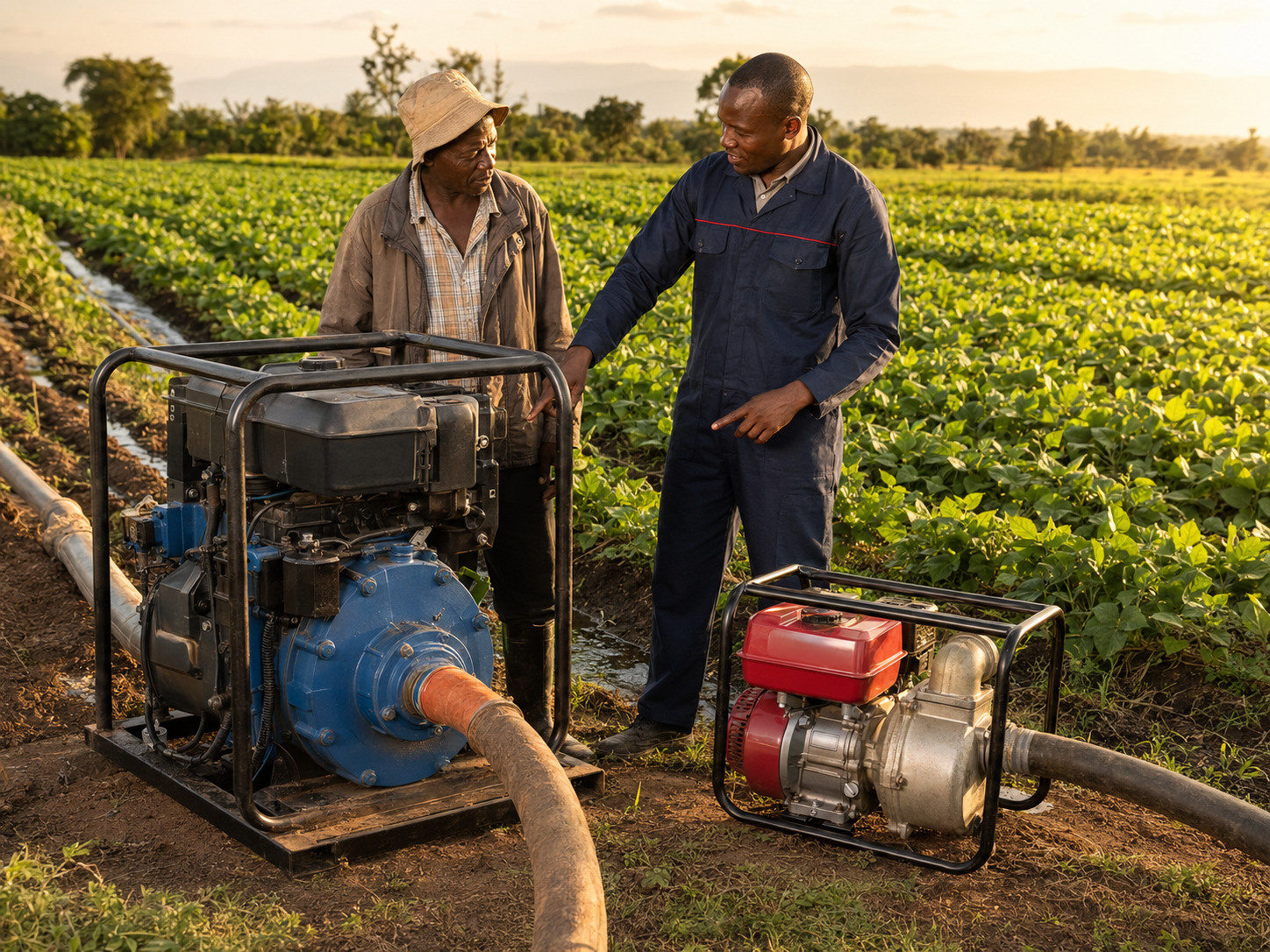
- Water pumps
- Power tillers
- Tractors
- Heavy-duty generators
- Construction equipment
- Industrial machinery
- Irrigation systems
Most small agricultural diesel engines operate on a four-stroke cycle and may use either air cooling or water cooling.
Advantages of Diesel Engines
1. Strong Torque
Diesel engines generally produce strong torque at relatively low engine speeds.
This makes them suitable for demanding tasks such as pumping large volumes of water, powering tillers, operating heavy machinery, and running equipment under continuous load.
2. Better Fuel Efficiency
Diesel engines are often more fuel-efficient than comparable petrol engines, especially during prolonged operation.
They can deliver more work from a given amount of fuel, which may help reduce operating costs over time.
3. Suitable for Continuous Use
Diesel engines are designed to withstand long operating hours and demanding workloads.
They are therefore commonly used in applications where equipment must run for extended periods, such as irrigation, construction, and backup power generation.
4. Durability
Diesel engines are generally built with strong internal components to withstand high compression.
With proper maintenance, they can provide a long service life and reliable performance.
5. Lower-Speed Operation
Diesel engines often operate at lower revolutions while producing substantial power.
Lower operating speeds may reduce unnecessary wear when the engine is properly maintained and used within its recommended capacity.
Disadvantages of Diesel Engines
Possible disadvantages include:
- A higher initial purchase cost
- Greater engine weight
- More noise and vibration
- Higher repair costs
- More difficult starting in some conditions
- The need for specialised maintenance
- Heavier and less portable equipment
A diesel engine may not be the best choice when low weight and easy movement are the main priorities.
Understanding Petrol Engines
A petrol engine uses a spark plug to ignite a mixture of fuel and air inside the combustion chamber.
Petrol engines are generally lighter, more compact, and easier to start than diesel engines. They are commonly used in small and medium-sized machines that need to be moved frequently.
They are often found in:
- Portable generators
- Water pumps
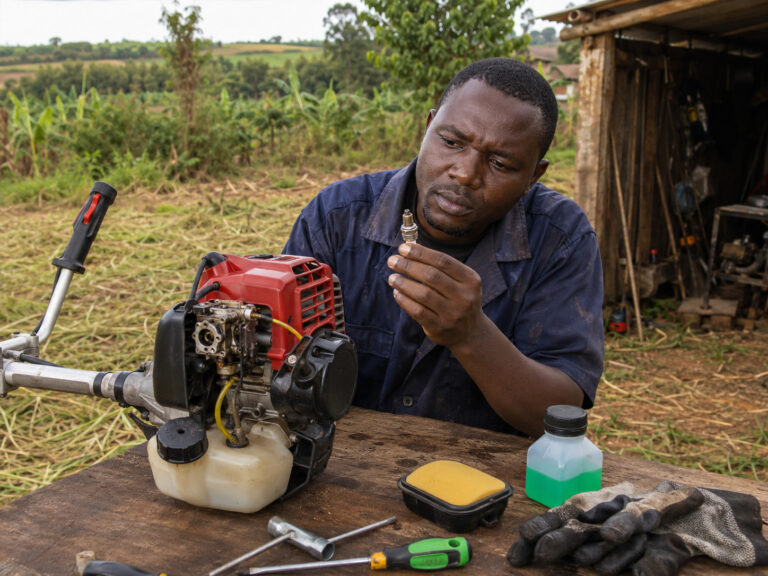
- Brush cutters
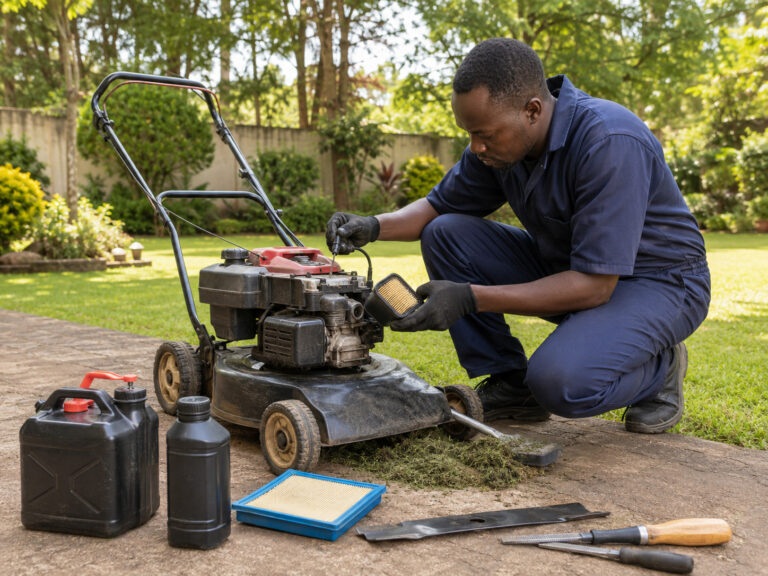
- Lawn mowers
- Sprayers
- Leaf blowers
- Small power tillers
- Other handheld or mobile equipment
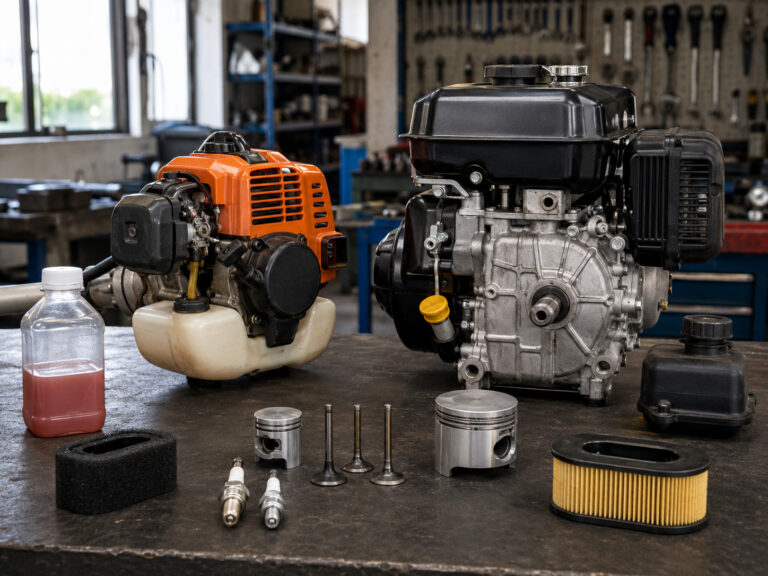
Petrol engines may be available in both two-stroke and four-stroke designs.
Advantages of Petrol Engines
1. Lightweight and Portable
Petrol engines are generally lighter than diesel engines of a similar capacity.
This makes them easier to carry, transport, and install in compact machinery.
2. Easy Starting
Petrol engines often start more easily, particularly in smaller machines.
This makes them practical for occasional users and equipment that is started and stopped frequently.
3. Quieter Operation
Petrol engines usually produce less noise and vibration than diesel engines.
They are therefore suitable for residential areas, gardens, small farms, and locations where noise is a concern.
4. Lower Initial Cost
Petrol-powered equipment is often less expensive to purchase than comparable diesel-powered machinery.
This can make it a practical choice for farmers and businesses with a limited initial budget.
5. Suitable for Light and Medium-Duty Work
Petrol engines perform well in applications that do not require continuous heavy loading.
They are ideal for portable equipment, short-duration tasks, and small to medium-sized farming activities.
Disadvantages of Petrol Engines
Possible disadvantages include:
- Higher fuel consumption during prolonged use
- Lower torque compared with many diesel engines
- A shorter service life under heavy continuous loading
- Greater sensitivity to stale or contaminated fuel
- Higher running costs in some applications
- Reduced suitability for heavy-duty work
A petrol engine may struggle or wear quickly if repeatedly used beyond its recommended capacity.
Diesel and Petrol Engine Comparison
| Feature | Diesel Engine | Petrol Engine |
|---|---|---|
| Ignition method | Compression ignition | Spark ignition |
| Fuel | Diesel | Petrol |
| Torque | Generally higher at low speed | Generally lower |
| Fuel efficiency | Usually better for prolonged use | Often lower under continuous load |
| Weight | Heavier | Lighter |
| Noise | Louder | Quieter |
| Vibration | Usually higher | Usually lower |
| Purchase cost | Generally higher | Generally lower |
| Maintenance | May require specialised servicing | Often simpler for small machines |
| Portability | Less portable | More portable |
| Best use | Heavy-duty and continuous operation | Light and medium-duty applications |
| Typical equipment | Tractors, tillers, pumps, large generators | Sprayers, small pumps, portable generators |
Factors to Consider Before Choosing
1. Type of Work
Begin by identifying the task the engine will perform.
A diesel engine may be more suitable for heavy loads, prolonged pumping, large generators, and demanding agricultural operations.
A petrol engine may be better for lighter duties, portable machinery, short tasks, and equipment that must be moved frequently.
2. Frequency of Use
Consider how often the machine will operate.
For daily or extended use, a diesel engine may provide better fuel economy and durability.
For occasional or seasonal use, a petrol engine may be more affordable and convenient.
3. Required Power and Torque
Check the power rating required by the equipment.
Diesel engines are often preferred when high torque is needed at low speeds. Petrol engines are suitable when quick acceleration, lower weight, and moderate power are more important.
Always select an engine that matches the equipment manufacturer’s recommended horsepower, speed, and shaft configuration.
4. Fuel Availability and Cost
Compare the availability and cost of diesel and petrol in your area.
Fuel prices alone should not determine your decision. Also consider the machine’s fuel consumption, operating hours, and workload.
A more fuel-efficient engine may cost more initially but save money over time.
5. Portability
If the equipment must be transported frequently, weight is an important consideration.
Petrol engines are usually easier to move and are commonly used in portable pumps, generators, and handheld machinery.
Diesel engines may be more appropriate for stationary or wheeled equipment.
6. Initial Budget
Petrol engines normally have a lower purchase price.
Diesel engines may require a larger initial investment, but their fuel efficiency and durability can offer better long-term value in heavy-use applications.
7. Maintenance and Spare Parts
Before purchasing, confirm that spare parts and qualified technicians are available locally.
Common maintenance requirements include:
- Engine-oil changes
- Air-filter servicing
- Fuel-filter replacement
- Spark-plug replacement for petrol engines
- Injector servicing for diesel engines
- Cooling-system checks
- Fuel-system cleaning
Choose a trusted supplier that can provide technical support and genuine replacement parts.
8. Operating Environment
Consider where the engine will be used.
A quieter petrol engine may be suitable near homes, institutions, or populated areas.
A diesel engine may be better for farms, construction sites, and remote locations where durability and continuous power are more important than noise levels.
9. Cooling System
Engines may use air cooling or water cooling.
Air-cooled engines are generally simpler, lighter, and suitable for many portable machines.
Water-cooled engines can manage heat more effectively during prolonged or heavy-duty operation, but they require additional maintenance.
Choose a cooling system that matches the intended workload and operating environment.
When to Choose a Diesel Engine
A diesel engine may be the better option when:
- The equipment will operate for long hours
- Strong low-speed torque is required
- Fuel efficiency is a major priority
- The engine will power heavy machinery
- The equipment will be used frequently
- Durability is more important than portability
- The machine will operate under demanding conditions
Diesel engines are especially suitable for larger water pumps, power tillers, tractors, construction equipment, and heavy-duty generators.
When to Choose a Petrol Engine
A petrol engine may be the better option when:
- The equipment needs to be portable
- The workload is light or moderate
- The machine will be used occasionally
- Lower purchase cost is important
- Easy starting is preferred
- Quieter operation is required
- The equipment must be moved frequently
Petrol engines are commonly suitable for small pumps, sprayers, lawn mowers, portable generators, and other compact machinery.
Important Maintenance Tips
Whichever engine you choose:
- Use clean, fresh fuel from a trusted supplier.
- Follow the recommended fuel grade.
- Check engine oil regularly.
- Change filters at the recommended intervals.
- Keep cooling fins and vents clean.
- Inspect fuel lines for cracks and leaks.
- Avoid operating the engine beyond its rated capacity.
- Follow the manufacturer’s service schedule.
- Store the engine properly when it is not in use.
- Seek professional support when faults cannot be resolved safely.
Proper maintenance helps improve fuel efficiency, reduce breakdowns, and extend the engine’s working life.
Final Thoughts
Diesel and petrol engines are both effective when used for the right purpose.
Diesel engines are generally more suitable for heavy-duty, continuous, and fuel-intensive applications. Petrol engines are often better for portable, lighter, and occasional-use equipment.
Before making a purchase, assess your workload, operating hours, fuel costs, maintenance needs, and available technical support.
The right engine is not simply the most powerful or least expensive. It is the one that matches your equipment, working conditions, and long-term needs.
Need help choosing the right machine?
Tell us about your acreage, location, crop, livestock, or intended application. Our team will help you identify a suitable machine.
Talk to Our Team